How We Can Better Teach our Kids About Sex, Before the World Does it First
Preface: I hate that I need to qualify what I’m about to write by stating this, but I know regardless, my words will inevitably be misinterpreted and misconstrued by some puritanical Latter-day Saints as inappropriate. I am a temple-worthy, covenant-keeping Latter-day Saint. I take the law of chastity and my temple covenant to keep it extremely seriously, and consider the topic of sex as something deeply sacred and to be discussed with reverence. I approach this topic in that mindset.

Start Younger Podcast with Dr. Doug Carpenter & Drew Boa
I was inspired by a recent episode from the Christian “Start Younger” podcast to write again about a topic I’m passionate about: better teaching our children about sex. My dear, fellow Latter-day Saint parents: We must do better communicating with and teaching our children about sex for their spiritual and physical safety. I get it; it can be extremely uncomfortable for us to bring this topic up with our children, but it’s imperative that we be at the forefront on this subject.
Some parents may consider it inappropriate, even sinful, to discuss sex with their children. Many of us were raised in insular families and developed prude views about sex, but have you read the Scriptures?! The Text does not support puritanical views concerning this issue. Sex is implicitly and explicitly mentioned all over the place! Adam and Eve knew each other and bore children; the drunken Lot slept with his daughters; Corianton slept with a harlot; Babylon is called the Great and Abominable Whore; and the seventh of the Ten Commandments is “you shall not commit adultery,” for goodness’ sake! Do we just shy away from discussing these stories and doctrines in God’s revealed words because we’re uncomfortable or embarrassed? No, we cannot! The prophets who wrote these Scriptures obviously weren’t too shy to mention these matters, and we shouldn’t be either.
We must change our mindsets about discussing sexual topics. It’s clearly evident from the Scriptures that the Lord’s ancient church wasn’t afraid to discuss sexuality. In ancient Hebrew/Israelite culture, sex was just a matter-of-fact part of daily life. Everyone old and young understood what genitalia were and what they were supposed to be used for. Surely, we shouldn’t just avoid reading the Scriptures because of some of the sexually-themed stories contained within them. We cannot allow our discomfort to hinder us from teaching our children the correct narrative about their reproductive anatomy and God’s purpose for its usage.
The Power of First Mention
The Church has counseled: “ … parents have the responsibility to teach [their children] about their [sexual] feelings and behavior in a timely, clear, and age-appropriate way” (Sex Education and Behavior; Church website). The first time a topic is mentioned, taught, or experienced with a child has a tremendous, foundational impact on the lens through which that child interprets that subject and acts on it in the future. This is called “the power of first mention.” For instance, if our children hear a worldly, distorted view about sexual intercourse first from their peers, this sets a negative foundational tone for how they view sex in the future. Conversly, if we, as parents, proactively teach our children first, through a Restored Gospel context, about God’s purpose for their reproductive organs, the joy of sexual relations within marriage, and saving those feelings and acts for our future spouses, it sets a positive, hopeful, and Christ-centered perspective for them to work towards.
It doesn’t matter how diligent or restrictive we may think that we are being with our children to shelter them from sexual issues or content; in this digital age, it takes just one friend with a smart phone or one innocent, misspelled Google search to accidentally expose children to inappropriate, raunchy, materials. If we do not take the initiative now to start talking to our children at younger ages, in age-appropriate ways, and from a Gospel-centered perspective, we are giving the Adversary the power to teach them first in his own corrupted way.
Children are being exposed to sexual topics and media at younger and younger ages. For instance, according to a 2024 Missouri Medicine study: “Boys are exposed to porn about age 10 to 11 and girls about age 12 to 13. By age 16 about 70% of boys watch porn four to five times per week” (Effects of Pornography on Youth: A Review; NIH). In some cases, porn exposure has even been reported as early as 5-8 years old. I’m not writing this article to just address the dangers of pornography. I merely mention this statistic to emphasize that the later we wait to discuss these subjects with our children, whether in their prepubescent or teenage years, it’s often too late; they've already heard a perverted version of it first from their peers or media. If we haven’t mentioned it to them first, we have consigned them over to the world to be their teacher.
Sadly, I’ve heard too many stories from my friends and acquaintances, through various men’s ministries and retreats I’ve been involved with, who recount that their parents never gave them “the talk.” For many of them, they discovered masturbation or porn on their own or from their peers. Their peers became their point of first mention on sexual topics, leading to confusion and years—even decades—of sinful sexual behaviors or habits. In my own experience: I innocently discovered masturbation myself at around five years old, and it became an entrenched, constant habit for decades.
For myself, and for my friends and acquaintances, I wish our parents would have taken the initiative to be the first mention in our lives on sexual matters, to shepherd us, to help us bridle our sexual thoughts and urges in godly ways. No more! This cycle is ending with me—I’m changing this trend for my own children. Ultimately, what this is about, and why we must start teaching our children at younger ages about their reproductive anatomy and sex, is to turn them to their Heavenly Parents and their Savior, so they can see their own potential to be co-creators with them, and so that they can be empowered to overcome potentially unhealthy or abusive situations in the future.

Why We Must Teach Our Kids About Their Anatomy & Sex at Earlier Ages:
To Address Masturbation & Sexual Exploration
As I mentioned before from my own story, it’s common for children from very young ages to start to explore their genitalia. This largely begins innocently as a form of self-soothing or comforting. If unchecked and unaddressed by parents, this self-soothing through maturation can morph into a lifelong habit, sometimes leading to more extreme sexualized media or actions.
To Address Exposure to Sexual Topics from Friends & Peers
Whether our children’s friends come from “good Christian families” or not, there is always a chance a child’s friends may be their first exposure to sexual topics. Relating to the topic of masturbation above, sometimes, especially with boys, other male peers may introduce their “new discovery” of what they can do with their genitalia to their male friends. If left unsupervised, it’s also very common for friends to explore their bodies with one another.
A side tangent about sleepovers, as one example: In my case, my first sexual experience was at about 8 or 9 years old at a sleepover with another boy my age. At the time, I had no concept of “sex” or “sexuality”; it was merely an innocent bodily exploration with a male peer. Although innocent, this very misguided exploration was extremely confusing to me at the time, distorted my mental and sexual development later in puberty, and since then, has been incredibly destructive to my mental health and sexuality up to today. Similarly, it was at a sleepover at a pastor’s home, that one of my brothers was first exposed to porn by the pastor’s son.
According to the Institute of Child Psychology, 70% of sexual abuse is enacted peer-to-peer, meaning between children of the same or similar age (see The Truth About Sleepovers No Parent Is Talking About). This is called “child-on-child sexual abuse,” or COCSA. According to Saprea, an organization that fights child sexual abuse, “We know that [COCSA] abuse is most likely to occur in environments where access, privacy, and opportunity intersect. Sleepovers, especially those involving multiple children, unfamiliar households, or limited supervision, can unintentionally create these conditions” (Are Sleepovers Safe for Kids? What Parents Should Know, Saprea). For these reasons, I will never allow my children to go to sleepovers, no matter how much I trust their friends’ parents.
While it’s very common for children to explore their bodies and sexuality with one another—and most of the time this exploration is not “abusive” per se, but merely an innocent curiosity among children—it can often be severely detrimental to a child’s sexual and arousal-template development later on during puberty and the maturing process.

To Address Exposure to Pornography
As stated above, the average age that children are being exposed to pornography is getting progressively younger. Some children, predominantly boys, are even getting exposed as early as even ages 5 or 6! Even with the strictest precautions taken and parental controls in place, in an age of computers, smart phones, and sexualized media of all kinds, soft and hard porn is just one accidental click or one sexualized TV commercial away.
To Prevent Sexual Molestation & Abuse
The most heartbreaking topic to have to address are cases of sexual molestation, or abuse. The vast majority of sexual abuse is perpetrated by family members or friends that we trust the most. Too often, abuse may continue because parents haven’t taught their children about appropriate touch, what to do to avoid abuse, or, when abuse occurs, children often cannot adequately describe what happened, because their parents only taught them inaccurate, cute nicknames for their genitalia, complicating the process of ending abuse and convicting an abuser.
In all these circumstances mentioned above, the solution to avoiding or rectifying a pernicious or traumatic situation is having clear, direct, Gospel-centered discussions about our reproductive anatomy, their purposes, how to safekeep them, and when to use them appropriately in the Lord’s eyes.
How We Can Teach Our Children About Sex
While my wife and I are imperfect in how we’ve implemented sex education with our children, I’m listing below what we’ve done to teach our children so far. We’ve gleaned this info from various different biblically-based, Christian resources, and applied them as we’ve felt inspired through prayer and careful consideration. We invite all parents to seek their own revelation on how to appropriately apply these principles in their individual families.
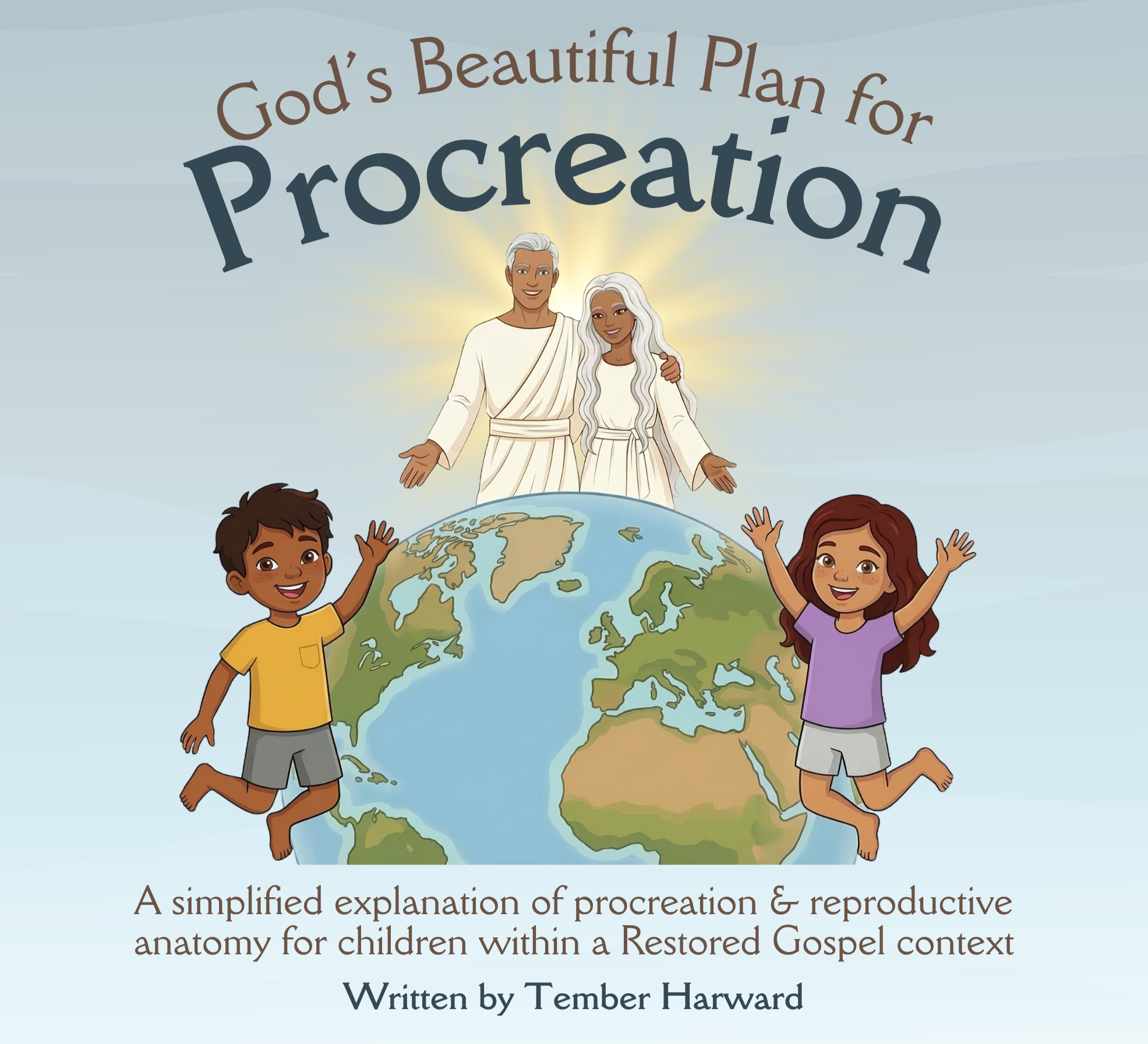
In my own amateur way, as part of our efforts to equip our children with truth, I wrote a simple book to help teach my children about eternal gender identity, puberty, reproductive anatomy, and procreation. The rhymes aren’t the best, but they get the points across. The book is titled, “God's Beautiful Plan for Procreation: A simplified explanation of procreation & reproductive anatomy for children within a Restored Gospel context.” I know that I’m largely a visual learner, as are many children, so I wanted to provide them with pictures that could simply, clearly illustrate these somewhat complex doctrinal principles.
Here’s how we’ve felt impressed to educate our children:
1. Keep it Gospel Centered
Focusing on Jesus Christ and Heavenly Father’s plan of salvation for us is the key. We have the glorious advantage, from the doctrines of the Restored Gospel, to understand that there is both a Divine Masculine and Divine Feminine; that we are literal children of our Heavenly Father and Heavenly Mother. Since our children were very young, we’ve repeatedly and frequently stressed to them that their genders and bodies are created in the likenesses of their Heavenly Parents. To my daughter: her spirit and body is created in the image of her Heavenly Mother. To my son: his spirit and body is created in the image of his Heavenly Father. Plain, simple, glorious doctrine!
Accordingly, we’ve also repeatedly emphasized how sacred their bodies are, drawing a parallel to the temple—as Paul does—and the need to maintain them, keep them healthy and fit, and use them in holy ways. Because having body insecurities has a propensity to lead to more severe issues later, like body dysmorphia and/or seeking out validation through porn or fornication, we’ve tried to instill confidence in them about their bodies. We do our best to not do or say anything that would create any negative body image complex in their minds.
We’ve stressed to them frequently that the foundational goal of mortality is to become like our Heavenly Parents, and to ultimately emulate their life and marriage to one another. This includes their role as Procreators. We’ve taught them that this also means using our bodies in the way our Parents use their exalted bodies, and that procreation is only to be done within a sealed, eternal marriage. We frequently reiterate these principles in our regular Gospel lessons and Scripture readings.
Ultimately, we’re striving to teach our children that sexual relations are glorious and beautiful, and something to be enjoyed and celebrated within the marriage covenant. We never want to convey the message in our tone or demeanor that the subject of sex or the act itself is something to be embarrassed or shameful about. Yes, of course, it’s something that should be discussed with reverence and be kept sacred, but its reverence and sacredness shouldn’t inhibit us from discussing it.

2. Start Young by Teaching Proper Anatomy
It’s never too early to start teaching our children. The Church recommends the following: “Start when your children are young by calling body parts by their correct names. This teaches children about their wonderful bodies and provides them the language they need to be healthy and informed” (How, When, and Why: Talking to Your Children about Sexuality; Ensign, 2020).
Using incorrect terminology creates confusion among children and adults. We’ve followed the Church’s counsel by teaching our children the proper names for body parts, including their genitals and reproductive organs. For my son, he does not have a “wiener,” “ballsack,” “balls,” or any other nicknames. No, he has a penis, scrotum, and testicles; the frenulum connects to the glans, etc. We’ve done similarly with our daughter.
Some parents may feel inclined to teach their children just to call their genitals “private parts,” but that phrase can be confusing, as private parts can denote various different body parts. It’s better to be specific with different body parts’ correct names, then later classify which of those parts should be considered “private.”
I know some parents will cringe at the anatomical graphics I have included in my book, or may recoil from using any anatomical illustrations at all to teach their children because they associate any rendering of the naked body with pornography. I get it; in our current cultural climate, there have been horrifying stories about perverted books marketed to children in school libraries that contain incredibly graphic sexual material. However, I cannot emphasize this enough: there is a massive difference between scientific anatomical diagrams of the human body and books that utilize pornographic imagery specifically designed to teach children about different sex positions and how to use sex toys. Obviously, the latter must be condemned outright. Showing children anatomically correct illustrations of the human body is not the same as exposing them to porn—they are simply not comparable. Say it with me: “Showing children anatomical illustrations is not the same as showing them pornography.”
3. Create an Environment of Non-Judgement & Trust
My wife and I have repeatedly emphasized with our children that they will never get in trouble or be punished for telling us about a bodily function, a sexual mistake, or of anything being done to them. We just ask that they tell us right away so that we can discuss it and address any serious issue. Our children aren’t at the age where they’re even remotely interested in dating or sexually interested in anyone, so we don’t need to worry about that yet, but we’re trying to foster a family culture where they can come talk to us about anything without fear of retribution. Maybe there might some a point where we might need to institute tighter restrictions as a consequence of some sexual sin, but if those circumstances arise, I would want my children to know that they aren’t being “punished” per se, but that these are the natural consequences of their behavior, and that those precautions don’t need to be in place forever. Maybe there’s a better approach, and if you have it, dear reader, I’d love to hear it.
4. Expound Incrementally
“The Talk” should not just be one major singular conversation in which we divulge everything. The Church has counseled us to teach our children about sex incrementally, giving more information when they’re ready to receive it. In the same Ensign article referenced before, it reads: “Most parents have a single conversation with their children about sexuality. But given the false messages youth are getting from the world today—sometimes on a daily basis—children need more than one talk from their parents.” In our family, this how we have progressively, proactively taught our children: (1) teach them about their anatomy using correct terms; (2) teach about our body parts’ functions, including our genitals’ functions and purposes; (3) teach that babies are created by the joining of a man and woman’s reproductive organs and gametes, and this is called procreation; and (4) teach that procreation should only be engaged in after a man and woman are married in the temple.
So far, we haven’t expounded to them the graphic details about how a sperm actually gets into a vagina to make a baby, but at their ages of 6 and 8, they already know the basic gist of what their genitals are designed for and how to use them in a righteous way to eventually create life some day like their Heavenly Parents. We will continue to proactively teach them in more depth as they mature and as they ask us questions. We make sure to let them know that they can ask us anything and we’ll always be happy to discuss it with them.

5. Role Play Addressing Negative Situations
Because we cannot avoid all unfortunate situations, we’ve sought to preemptively address any potential difficult life situations with our children. Here are some questions for possible situations that we’ve discussed with our children:
When and where is it appropriate to be naked?
Who is allowed to see your naked bodies and/or touch your private parts?
What is appropriate touch?
What happens if your friends want to show you their private parts or want you to show yours to them?
What should you do if a friend or neighborhood kid shows you pictures or videos of naked people?
Is it ever acceptable to be alone with children or adults in their house or room?
In discussing these questions, we’ve role-played what they should do if they encounter any of these situations. In the near future, I hope to address potential situations in which—God forbid it ever happens—they may encounter adults trying to sexually abuse them. I want to discuss what they should do if an adult asks them to keep a secret, or tries to see or touch their private parts. It makes me sick to think of this ever happening to my children, but if they can be prepared beforehand and aware of the signs, I pray they will recognize them and avoid a horrible situation. At the very least, I pray they will be able to report it to us immediately if it ever happens.
Conclusion
Fellow parents, it’s our responsibility to teach our children these things. They rely on us. Let’s not allow the Deceiver to teach them a distorted version of reality before we take the opportunity ourselves. Frankly, I’m not willing to allow my children’s minds to be polluted by corrupt ideas from other peers or influences. I want them to understand the sacred and beautiful role that sex plays within God’s plan for procreation and the exaltation of His children. This is the vision that I desire for them to pursue as they seek future spouses and start their own families.
I hope that these tips from our experience can be helpful for you as you interact with your own children. I pray that we all can be more proactive in teaching our children about their anatomy and sex so that they can be prepared for life’s changes and challenges. Let’s equip them with the knowledge and tools they need so they are empowered to overcome any difficult situations in the future. As we do this, we help our children emulate their Heavenly Parents and become partakers of the divine nature with them.
Resources:
Ensign Article: How, When, and Why: Talking to Your Children about Sexuality
Book by Tember Harward: God's Beautiful Plan for Procreation: A simplified explanation of procreation & reproductive anatomy for children within a Restored Gospel context
Book by Cherri Brooks: Teaching Children about Sex: Using the Temple as Your Guide
Christian Podcast: Start Younger Podcast